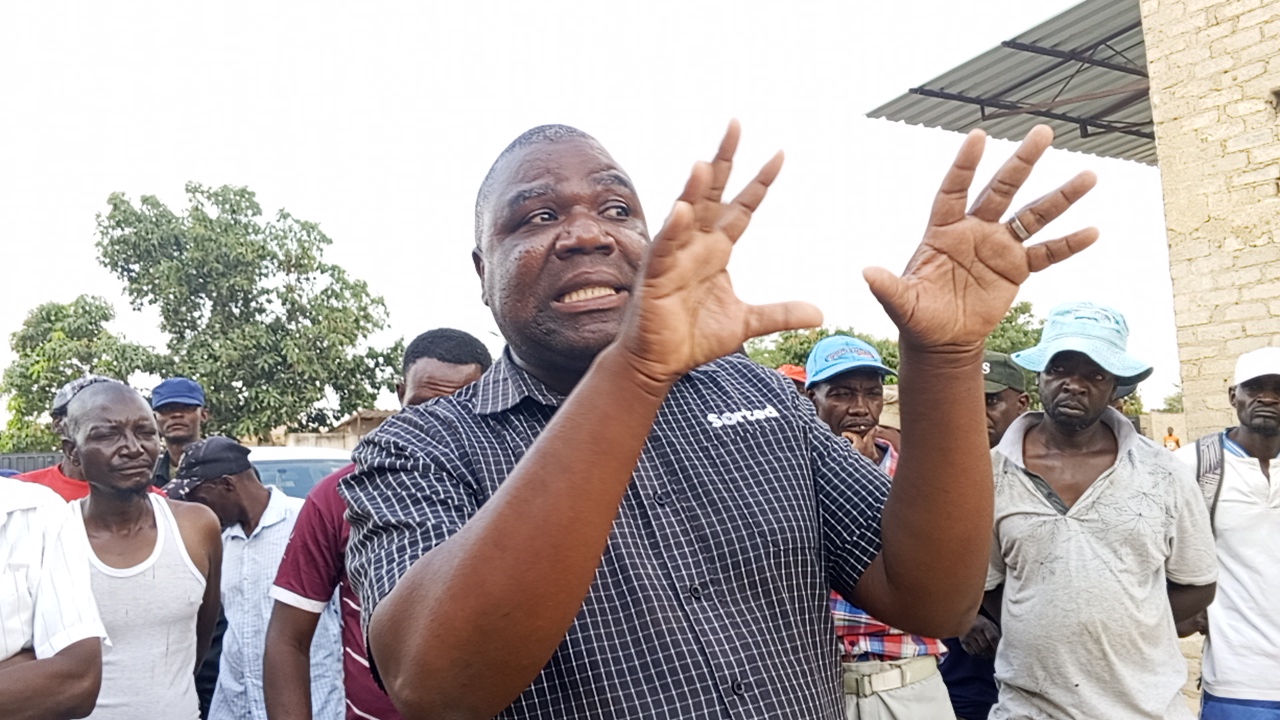
Throughout the heated exchanges, Council officials maintained their composure.
A resident questioned whether the Council knew the population size of the Nyatsime community when preparing the budget.
“My first question is: have you taken the necessary steps to know how many people you are budgeting for?” asked the resident.
“You must conduct data collection because here in Nyatsime we are now rightful owners of these stands. There are no illegal settlers here, and I am requesting that you first conduct proper data collection before talking about the budget in this community.
“We have minutes prepared from last year’s budget meeting—let this not just be a formality where you compile notes and end there. You should not use this process to deceive the government. What is the Council doing to end double allocations?”
Another resident questioned what Council had implemented since the previous year's meeting.
“Last year we held the same meeting, which yielded nothing. I want to thank our Councillor, Nyarai Chisango, for choosing this venue; you did an exceptional job, because whenever we ask you questions, there are no responses.
My question now to the Council officials is: what is happening to the rates we pay?
“This community has property owners with proper documentation, but no services are ever rendered, including refuse collection. A cholera outbreak in Chitungwiza will start right here in this community; typhoid will start here.
Even these shops you identified as a venue have no public toilets. If someone needs to relieve themselves right now, they will be in great trouble,” the resident noted, before urging the Council to provide gravel so roads remain navigable during the upcoming rainy season.
Inquiring about budget performance, a third resident addressed the Council's revenue collection.
“Mrs [Dr Evangelista] Machona, you presented that Council managed to collect 58% of billable revenue instead of 100%. My question is: of that 58%, is there a portion returned to us, and what percentage does Council keep?
“My second question is directed to Councillor (Nyarai) Chisango, whom most of us are seeing here for the first time today after being introduced by Dr Machona.
My plea to our Councillor is that many of our issues require your presence to solve. We want a Councillor who has us at heart and is accessible to everyone. A Councillor should be like an evangelist. I would also like to know: where do you reside?” asked the resident.
In response, Dr Machona assured residents that road infrastructure plans were underway.
“It is not our first time having meetings with you, and what I appreciate is that you speak your mind,” she said.
“Firstly, there will be a Ward retention fee allocated from what you contribute. Secondly, plans are in place to construct and rehabilitate roads—what is needed now is money. The road leading to the cemetery is included in our plan, and we will address it as we procure machinery.
“We also implore residents who have not yet opened property files to visit our offices. Our goal is for you to receive title deeds.
Do not harbor fears that Council will one day evict you or that the government will demolish your structures. If you owe anything to Council, please pay—it will work to your benefit.”
Zengeza District Officer, Mr Chinganga, emphasised that Council does not take sides when resolving land disputes, explaining the four distinct categories of residents in Nyatsime:
Beneficiaries occupying their original allocated stands.
Property owners with valid documents who expanded onto 500-square-meter plots instead of 200 square meters through a pressure group led by a Ms Matambo.
Beneficiaries holding official Council paperwork who were never physically allocated land.
Individuals who took advantage of the situation to illegally occupy stands.
“We are currently resolving these issues,” Mr Chinganga stated.
“We will address data collection starting with the illegal settlements. Lastly, if you see our team on the ground, please do not offer bribes.
Corruption involves two parties—the person offering the bribe and the one receiving it—making both guilty as charged.”