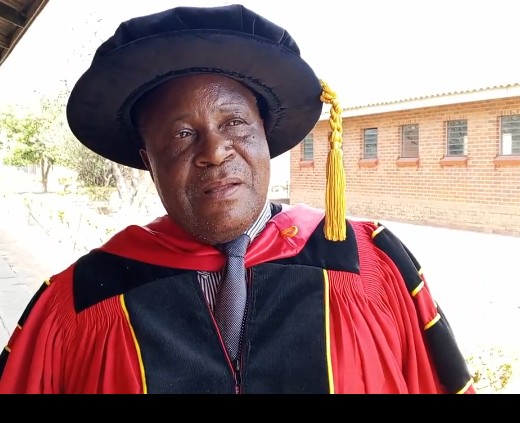
He made the remarks in an interview on the sidelines of the Seke 3 High School Speech and Prize-Giving Day last Friday.
“I really appreciate the various innovations and changes that took place in this particular area,” said Dr Kujeke.
“Firstly, it was communication which was supposed to be between the school administration and the parent body. There was a little bit of chaos; however, I managed to engage and train all the School Development Committee (SDC) personnel—at one time in Murewa, and another time at ZIPAM, where we had about 450 participants.”
“This created a very conducive environment for mutual support, resulting in very supportive SDCs. The current SDCs have been in place since 2023, and their participation level is very high, especially regarding school infrastructure.”
He added: “A lot of laboratories have been built, and many other projects have been completed. Schools have significantly improved their communication systems through Information and Communication Technology (ICT).”
“About 75% of our public schools now have serious ICT integration compared to our private schools. Chitungwiza has about 252 schools in total, including both public and private institutions.”
“We also have at least 74 unregistered schools, which we are working to get registered. Since I came here, I have tried to include everyone by inviting both private and public schools to participate in the supervision of educational institutions.”
The DSI also highlighted that nearly 60% to 70% of public schools in Chitungwiza have installed CCTV systems, allowing school heads to monitor premises without having to walk around constantly.
“We also have Starlink, which has improved internet flow within the district, as well as interactive boards that assist in delivering content under the Heritage-Based Curriculum.”
“The curriculum changes now feature core subjects for both Grade 7 and Form 4 learners, marking a turning point by incorporating ICT rather than relying solely on textbooks.”
However, Dr Kujeke lamented the continuous decline in local industrial growth, which has created economic hardships and forced residents to commute daily to Harare, making community engagement more challenging.
“When we come to the educational front, we have been doing quite well in Chitungwiza. I have made a number of friends, to the extent that people often tell me I shouldn't leave because they have seen so many vibrant activities—whether in sports, social, or cultural domains,” he said.
“When you look at our examination results, we have been doing very well and I am truly appreciative. For instance, here at Seke 3, results have improved, which is a major step forward.”
“We are also pleased that issues of gender-based violence, drug use, and substance abuse are no longer on the rise, thanks to the continuous awareness campaigns we conduct across schools using a multi-sectoral approach.”
Reflecting on his contributions at a recent strategic planning workshop in Kadoma, the DSI noted that he would continue engaging the local municipality to ensure road safety for learners.
“When I attended the strategic meeting in Kadoma, I emphasized that we do not just want zebra crossings near our schools—we need speed humps. The local authority must also make frantic efforts to patch potholes, as vehicles suffer costly damage.”
“We also discussed waste management issues. There is a lot of effluent flowing in the area, and I suggested engaging waste management experts like Geo Pomona so that sewage can be redirected to a central point and harnessed to produce biogas.”