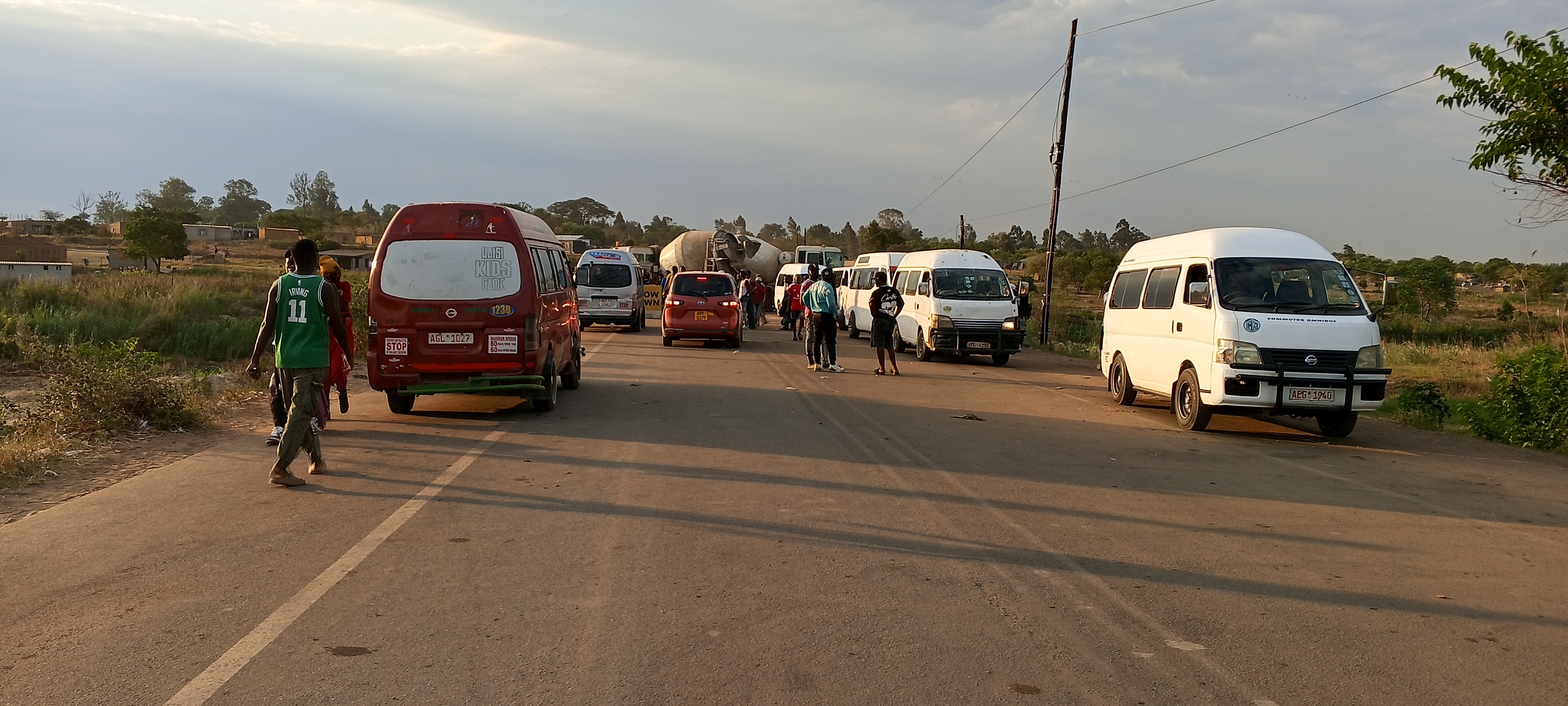
Meanwhile, drivers are also crying foul, arguing that ongoing roadworks are taking too long to complete.
The Chitungwiza–Machipisa route is heavily relied upon by workers and travellers visiting relatives.
The current disruption has caused widespread frustration, prompting commuters to plead with responsible authorities to intervene.
A commuter working as a security guard, who spoke on condition of anonymity, described the situation as unbearable.
“What they should have done was to first attend to the bridge section up to where it ends, while allowing traffic to flow using the detour,” she said.
“We are left stranded every day when we are dropped off at DDF and forced to walk across to the other side of the bridge to board another kombi to Chitungwiza. They should make a plan—what they did was premature.”
She added: “In the morning, we cross to the Harare side through the Manyame (Hunyani) River. The kombis are getting damaged and frequently developing mechanical faults, forcing us to walk to DDF again. We are arriving late to work, and the situation is very bad.”
Another commuter noted that while the Ministry of Transport and Infrastructural Development issued a public notice regarding the road closure, the pace of construction remains unacceptably slow.
“We saw the notice issued on Sunday stating that the road would be closed, but we are now several days in and there is no progress at all. What they are good at is closing roads, but look at how many people are being affected,” the commuter said.
“Our plea is for them to expedite the process. To anyone who can share this message with the President, please do so. We are being charged $2 or $3 per trip—how much are we actually earning?”
Mr Humba, another affected traveler, shared similar concerns about the daily disruption.
“What is severely affecting us is that the kombis cannot cross to the other side. We are dropped off on the Chitungwiza side and have to walk across the bridge to catch another kombi to Machipisa,” he said, before adding optimistically, “Anyway, hopefully the crisis will be over soon once the road is completed.”
A fellow commuter highlighted the severe impact on the working class and travellers carrying goods.
“As someone going to work in the morning, getting dropped off on the Chitungwiza side means extra money spent. Having to board a second kombi on the other side is unbearable, and it causes us to arrive late at work,” he explained.
“Imagine someone carrying heavy luggage being forced to disembark and walk—it is simply unrealistic. They should expedite the process. Closing the bridge entirely was a bad move.”
Kombi drivers have also urged contractors to speed up work, stating that the closure hurts their livelihood as well.
“Contractors must ensure that the works are completed quickly so we can transport passengers safely,” one driver said.
“Some travellers are being fleeced by touts who promise to guide them across to the next connection, only to steal their money and leave them stranded.”
He added: “On our end, we are struggling because we can no longer meet our daily cash targets. That is why these roadworks urgently need to be expedited.”
A visit to the site painted a grim picture, with crowds of commuters—both young and old—forced to trek long distances on foot every day.
Contacted for comment, the Ministry of Transport and Infrastructural Development Communications and Advocacy Officer, Ms Judith Nhau, promised to provide a response, but had not done so by the time of publication.